July 11, 2026
Editorial
Editorial
Some of the scene pushed back on the Top 10 — that skateboarding shouldn't be ranked at all, and that the results were wrong. Here's our answer, and the eight criteria in full.
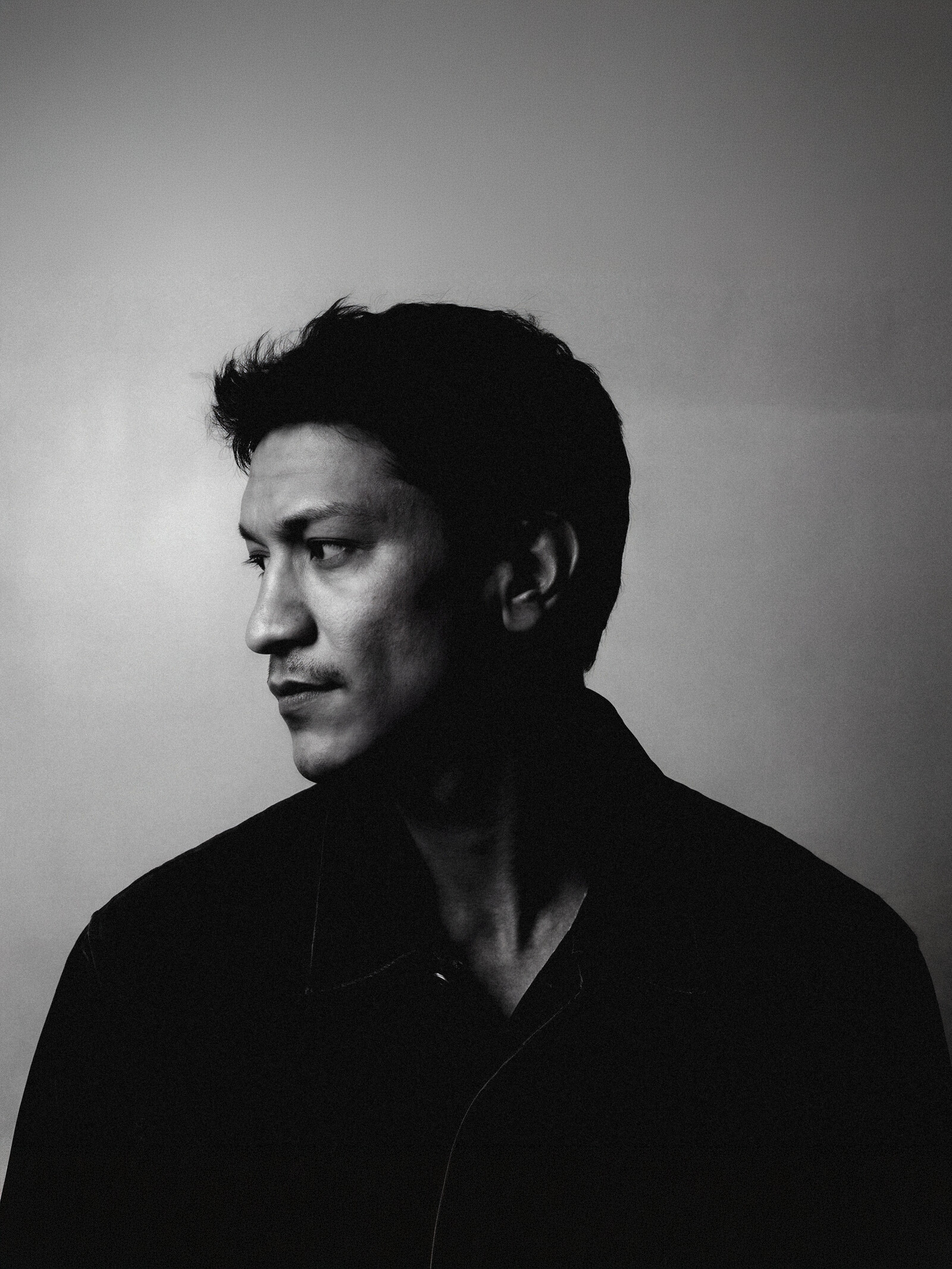
A global skate icon clawed his way back from the edge. The kids I came up with in Egypt were escaping the same thing with none of the same net — and not all of them made it. A reckoning from inside the scene.

Content warning: this piece deals with addiction, overdose, and loss. A support resource is listed at the end.
Two months ago we buried another friend. He was the fourth in seven years. Four. Four phones that stopped answering. Four times the chat went dead silent in that same way you never get used to. All of them skaters. All of them beautiful souls that shaped some part of myself. All of them close to my heart.
And every time, my head rolls to the same dude. Bam Margera.
Before any of this was about losing people, it was about the exact opposite. You gotta understand what the scene actually feels like when it’s good, or none of the rest is gonna land.
Egyptian skateboarding is brotherhood with griptape on it. A crew of kids from different streets, different backgrounds, different classes — agreeing on nothing, yet one hundred percent agreed on one thing: this. It’s taking a city that was never built for you and deciding it’s a skatepark anyway — turning the same ledges they swarm with security into the whole entire point. And you know the feeling. Every skater reading this knows it in their chest: the sesh is clicking, the light’s going gold, and somebody finally rolls away clean from the trick they’ve been slamming on for an hour — and for one second the whole world is yours. Not your friends’, not your family’s, not the economy’s, not anybody’s. Yours, the four or five maniacs you love, and the board under your feet.
That’s the whole reason we do it. It’s also — I think — the wound. Because what happens to a kid when the one place he ever felt free is a thing the world keeps swearing has no future?
We came up on Bam. Not tabloid Bam — the real one. The Element parts we rewound till the tape wore thin. CKY, Jackass, the stuff we quoted like scripture. Bam was the one. Not Sheckler — not the clean cover kid the mags loved. Bam. The hesh one. The one who made full-blown chaos look like the most fun a body could have on four wheels. If you skated with a little too much fire in you, with all due respect to the legend but you didn’t want to skate like Sheckler. You wanted to be Bam.
And then we watched him almost die. For years. Out in the open. The addiction, the relapses, the headlines ticking down like a countdown clock. There were long stretches where it straight-up looked over.
It wasn’t. As I write this, Bam’s about half a year sober — hit the milestone this spring — and he’s back on his board. Court-ordered rehab, an ibogaine treatment, and he came out the other side saying the quiet part loud: skating is the thing keeping him alive. “I need it in my life,” he said, “or else I’ll die.” He still leans on weed to stay off the stuff that was killing him. He’s not cured. He’s standing up today — and he’s real about how thin the ice is under that word, “today.”
He made it out. For now. And anybody who’s been near real recovery knows “for now” is the most honest phrase there is.
Here’s the thing I can’t stop rolling around in my head.
Bam Margera had every single thing money and fame can throw between a person and the edge. Rehab that costs more than most Egyptians make in years. A whole global community watching, hyping him, willing him home. Sponsors, second chances, an entire industry praying its prodigal son would live. The world stitched him a net and held it under him.
As I was finishing this piece, Rolling Stone gave him the full comeback treatment — the Britney Spears of Jackass, getting back on top. Even his collapse gets legacy-press aftercare.
My friends fell with nothing under them. Nothing at all.
Here’s what never makes it into the feel-good “skateboarding in Africa” edit some brand drops to look cultured for a week: what these kids are actually trying to escape.
Grief, mostly. The grief of not being seen. Not knowing what you’re worth. Having a gift the world around you calls a waste of time. Skating handed us somewhere to be somebody — and the same streets handed us something else, too. Plugs. Stick around long enough and you get offered stuff. The expensive stuff first. Then, when the money dries up — and it always dries up — the cheap stuff. The stuff that takes you faster.
And none of this is rumor, none of it’s secret. By Egypt’s own National Addiction Survey, addiction here runs at something like a tenth of the population — about double the global average — and it hits the young hardest, most people starting between fifteen and twenty-five. It moves in an ugly order, too: hash first, then when the cash runs thin, the cheap synthetic garbage. They call one of them Strox — a lab-cooked high that can hit way harder than the plant it’s faking, cut with god-knows-what, sold for basically nothing. Treatment centers watched it jump from a sliver of their cases to a quarter of them in a single year. With a dose nobody can measure, your first one or your next one can be your last. And then there’s heroin — the ultimate destroyer. That’s where the story usually ends: a harsh full stop.
This is a crisis the country itself says out loud — there’s a national hotline for it. Which is exactly why I’ll write it plain: I’m not snitching, I’m not airing some secret. I’m grieving out loud, the way the homies I lost deserved somebody to go to bat for them out loud.
And I’ll say the part nobody says at the sesh: we did not all come up the same. I won’t rank anybody’s pain, but class is real, and it’s the quiet line running under every one of these stories. Some of us had family who could reach in and yank us back. A passport. A door. Some of us had none of that. The drugs never picked by character. They picked by who had a net and who didn’t.
And then there’s the part that wrecks me the most — because it’s the part we did to ourselves and the part that got done to us, at the exact same time.
We’re in love with a thing that’s got a tougher future ahead of it here.
Don’t get it twisted — the scene here is real, and it’s older and gnarlier than people think. Kids have been skating Cairo since the eighties. We’ve clawed out skateshops, filmed our own parts, even threw real street contests with a federation behind it. That’s not nothing. To us that’s everything. But look close and you see how thin the ground is. The few legit parks that exist got built by private developers and malls — not as free public concrete — and the heads running our own events flat-out say what they really want is public parks, somewhere any kid can just roll up and skate safe. And there’s still no path: no Egyptian kid can say “I’m gonna be a pro skater” out loud without it landing like a punchline.
And the spots fight back. Everywhere on earth, ledges get capped and benches get knobbed to run skaters off — here it’s the same, except there’s almost nothing built to catch us instead. Meanwhile the skate world runs on dope tricks and dope spots, and “look, kids skating in Africa” is a cute little clip that trends for an afternoon and is gone by the weekend. The novelty doesn’t last. The kids are supposed to.
So sit in it for a sec. You found the one thing that makes you feel free, and it can’t feed you, can’t house you, can’t carry you anywhere the world will clock as real. It lifts you all the way up and sets you right back down in the same spot, every single time — a little more in love, a little more stuck. For Bam, the board was a ladder out. For too many of us, it’s a perfect room with no door.
The thing we love can’t catch us — because here, it’s barely even allowed to exist.
I should pump the brakes before I climb up on a soapbox, ’cause I haven’t earned the height.
I made it out — kinda. Real talk on how: I had privilege, and I bounced. Went to LA. That’s the whole trick, and it’s not a trick anybody should have to pull just to stay alive. And even then — even with the distance, even with the net — I went through my own phase there too. I’m not writing this from some clean mountaintop. I’m writing it from the middle of my own mess, which is the only honest place to write it from.
So why write any of this, if I’ve got no clean ending to sell you?
Because Bam’s right about one thing, and it’s the only thing I need the next kid to hear: it’s never over. The board’s still there. The homies are still there. Don’t take both for granted. Long as you can push one more time, it ain’t finished.
But Bam had something we don’t: he had somewhere to come back to. A community with a roof over it. A scene that could catch him when he fell. If we want our kids to make it out — actually out, not out-like-me-bouncing-to-LA, and not out the way the four of them went — we’ve gotta build the net they never had. Public concrete any kid can roll into. Support that doesn’t cost a family everything. A reason to believe the thing they love could one day love them back.
I won’t write their names. But I’ll write this: you were the best of us. Life is quieter without you. And I’m still skating partly so the next kid doesn’t have to roll away alone.
If you or someone you love is struggling with drugs: Egypt’s national addiction hotline — 16023, run by the Fund for Drug Control and Treatment of Addiction — is free and confidential, and seeking treatment voluntarily carries no legal consequences.
Some of the scene pushed back on the Top 10 — that skateboarding shouldn't be ranked at all, and that the results were wrong. Here's our answer, and the eight criteria in full.
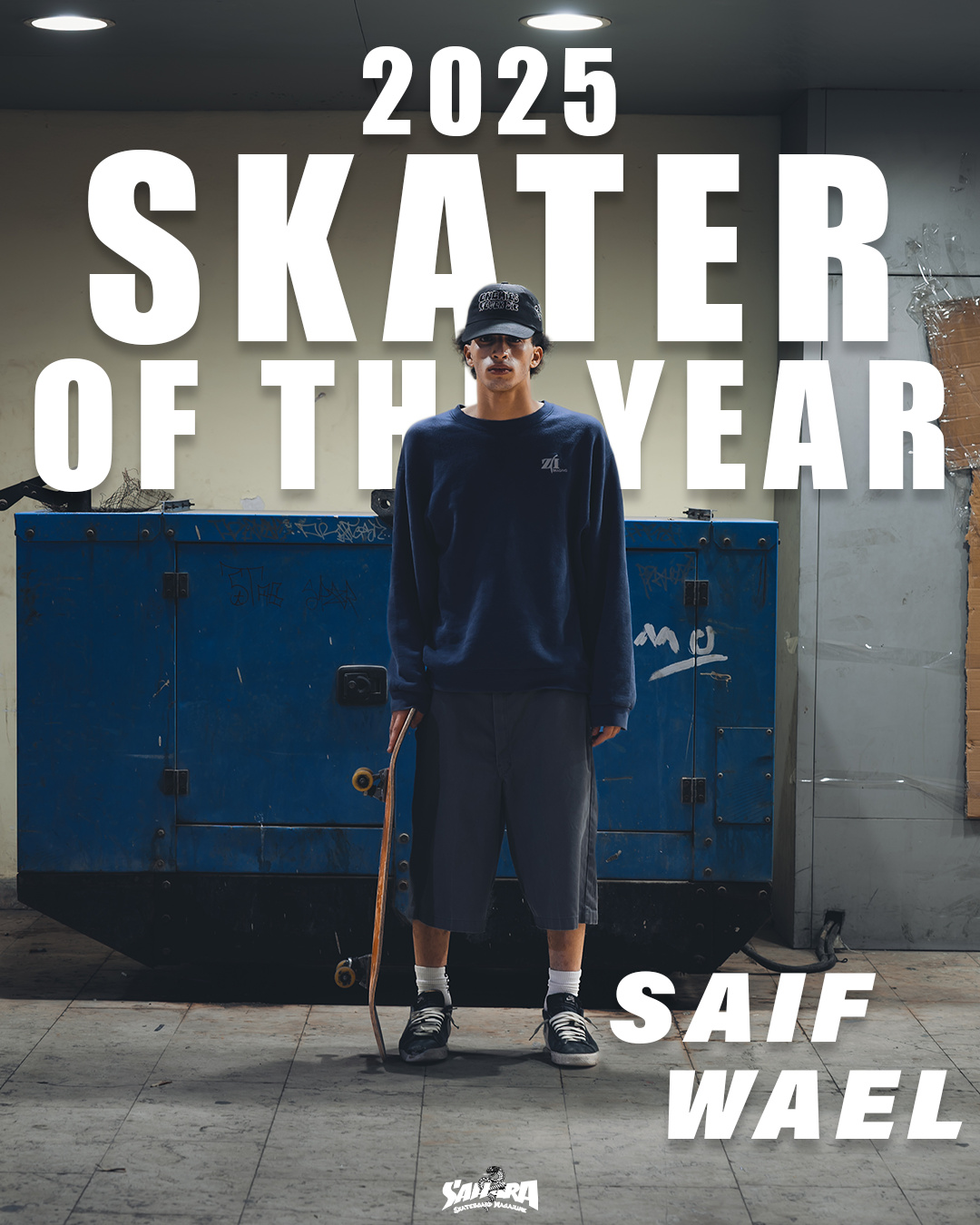
Skater of the Year 2025 goes to Saif Wael — Cairo local, Zamalek-raised, eighteen years old, with style and consistency you can't teach.
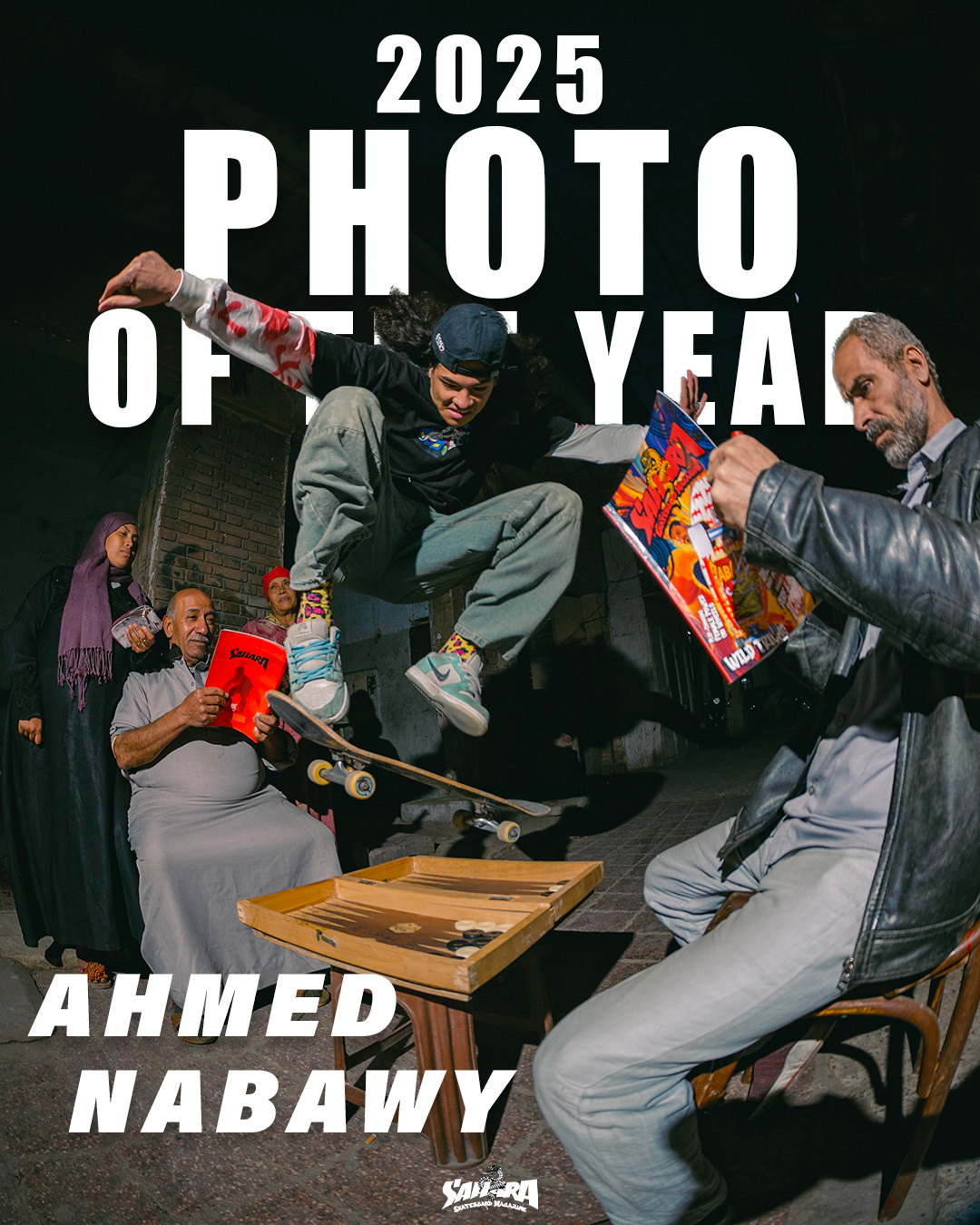
Photo of the Year 2025 goes to Ahmed Nabawy (slomosk) — SAHARA co-founder and chief photographer, behind so many of the images that became the memory of Egyptian skateboarding.